• Publication Assurance in SCOPUS, PubMed, Web of Science, Embase, and Google Scholar-indexed journals (As per UGC Suggestive Parameters)
• Paper and Author Indexing Assurance
• Publication options: Regular Issue and Special Issue
Call for Papers
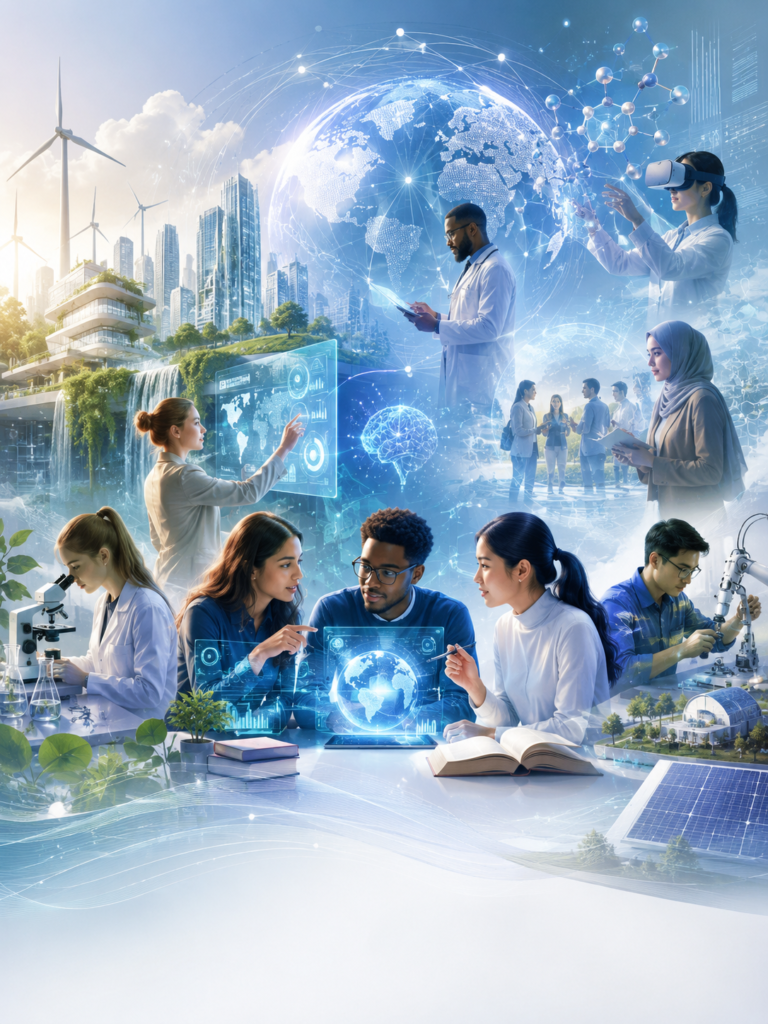
Original and unpublished research papers, conceptual papers, review articles, case studies, policy papers, and innovative practices are invited from academicians, researchers, industry experts, professionals, scholars, practitioners, and students from multidisciplinary domains including Science, Engineering, Technology, Management, Commerce, Arts, Humanities, Social Sciences, Law, Education, Computer Science, Artificial Intelligence, Healthcare, Agriculture, Media Studies, Environmental Studies, Library Science, Design, Performing Arts, Tourism, Architecture, Pharmacy, Social Work, and allied disciplines.
Interdisciplinary and emerging research themes aligned with innovation, sustainability, digital transformation, policy development, global challenges, and future-oriented academic discourse are especially encouraged.
Accepted Languages
English, Hindi, Sanskrit and Gujarati
Concept Note
The twenty-first century has emerged as an era of rapid transformation driven by technological innovation, globalization, sustainability concerns, digital disruption, and evolving human aspirations. Contemporary societies are witnessing profound shifts in education, governance, healthcare, industry, communication, culture, and knowledge production. In such a dynamic environment, multidisciplinary approaches have become essential for addressing complex global and local challenges.
The traditional boundaries between disciplines are increasingly dissolving as modern problems demand integrated perspectives, collaborative inquiry, and innovative thinking. Emerging trends such as Artificial Intelligence, sustainable development, digital governance, climate resilience, Industry 5.0, smart healthcare, data-driven policymaking, entrepreneurial ecosystems, and human-centered technologies require collective intellectual engagement from multiple academic and professional domains.
This international multidisciplinary conference aims to provide a vibrant academic platform for researchers, educators, innovators, policymakers, industry professionals, and students to exchange ideas, share research findings, and deliberate upon emerging trends shaping the future of society. The conference seeks to encourage interdisciplinary dialogue, foster collaborative research networks, and explore transformative pathways for sustainable and inclusive development.
The conference intends to deliberate upon critical questions such as:
- How can multidisciplinary research contribute to solving contemporary global challenges?
- How can emerging technologies be aligned with ethical, sustainable, and human-centered development?
- What role can education, innovation, and research play in shaping resilient societies and future economies?
- How can academic institutions encourage interdisciplinary collaboration and transformative learning ecosystems?
- How can traditional knowledge systems and modern scientific advancements coexist for holistic progress?
Objectives of the Conference
- To promote multidisciplinary research and collaborative academic engagement across diverse disciplines.
- To explore emerging trends, innovations, and transformative developments influencing contemporary society.
- To encourage dialogue between academia, industry, policymakers, and researchers for sustainable and inclusive growth.
- To provide a platform for presenting innovative ideas, research findings, and practical solutions addressing global and local challenges.
- To foster interdisciplinary approaches in education, governance, technology, healthcare, environment, and social development.
- To examine the role of digital transformation, artificial intelligence, and emerging technologies in shaping future societies.
- To encourage young researchers and scholars to engage in critical thinking, innovation, and knowledge creation.
- To facilitate networking opportunities and long-term academic collaborations among participants from different disciplines and regions.
Download Conference Brochure
Click Here to Download Conference Brochure
Major Themes and Sub-Themes
The following themes are suggestive in nature. Papers from other related multidisciplinary areas are also welcome.
1. Emerging Trends in Education and Learning Systems
• Digital learning and blended education models
• Artificial Intelligence in education and assessment
• Outcome-based education and academic innovation
• Skill development and employability enhancement
• Multidisciplinary learning under NEP 2020
• Future classrooms and smart education ecosystems
2. Artificial Intelligence, Data Science and Digital Transformation
• Artificial Intelligence and machine learning applications
• Big data analytics and predictive technologies
• Cybersecurity, privacy, and digital ethics
• Internet of Things (IoT) and smart systems
• Blockchain technologies and digital governance
• Human-centered AI and responsible innovation
3. Sustainable Development and Environmental Studies
• Climate change and environmental sustainability
• Renewable energy and green technologies
• Sustainable urban planning and smart cities
• Water conservation and ecological resilience
• Circular economy and waste management
• Environmental policies and global sustainability goals
4. Healthcare, Wellness and Medical Innovations
• Public health systems and healthcare management
• Digital healthcare and telemedicine
• Mental health and holistic well-being
• Integrative medicine and wellness practices
• Healthcare technologies and biomedical innovation
• Nutrition, lifestyle disorders, and preventive healthcare
5. Business, Commerce and Entrepreneurship
• Digital economy and e-commerce transformation
• Start-up ecosystems and innovation management
• Sustainable business models and corporate governance
• Financial technologies and emerging markets
• Leadership, strategy, and organizational transformation
• Entrepreneurship for social and economic development
6. Science, Engineering and Technological Innovation
• Smart manufacturing and Industry 5.0
• Robotics and automation technologies
• Advanced materials and nanotechnology
• Green engineering and sustainable innovations
• Computational sciences and emerging technologies
• Scientific innovation for societal transformation
7. Humanities, Social Sciences and Cultural Studies
• Social transformation and inclusive development
• Media, communication, and digital culture
• Literature, identity, and globalization
• Gender studies and social justice
• Cultural heritage and civilizational studies
• Ethics, values, and human development
8. Law, Governance and Public Policy
• Constitutional values and democratic governance
• Cyber law and digital rights
• Human rights and social justice
• Environmental law and sustainability policies
• Public administration and policy innovation
• Legal frameworks for emerging technologies
9. Agriculture, Rural Development and Food Security
• Sustainable agriculture and food systems
• Agri-technology and smart farming
• Organic farming and environmental ethics
• Rural entrepreneurship and cooperative development
• Climate-resilient agriculture
• Agricultural policies and rural innovation
10. Media, Journalism and Communication Studies
• Digital journalism and new media ecosystems
• Media ethics and misinformation challenges
• Social media and public discourse
• Communication technologies and cultural narratives
• Journalism in the age of AI
• Media literacy and responsible communication
11. Tourism, Hospitality and Cultural Economy
• Sustainable tourism and eco-tourism
• Cultural tourism and heritage management
• Hospitality innovation and service excellence
• Tourism entrepreneurship and destination branding
• Digital transformation in tourism industries
• Community-based tourism development
12. Indian Knowledge Systems and Holistic Development
• Indian knowledge traditions and contemporary relevance
• Yoga, mindfulness, and holistic well-being
• Indigenous knowledge and sustainable living
• Ethics and values in education and society
• Traditional wisdom and modern innovation
• Civilizational perspectives on human development
Research Questions
• How can multidisciplinary approaches solve emerging global challenges?
• What role can Artificial Intelligence play in transforming education, healthcare, and governance?
• How can sustainability be integrated into development policies and institutional frameworks?
• How can higher education institutions foster innovation and interdisciplinary collaboration?
• What are the ethical implications of digital transformation and emerging technologies?
• How can traditional knowledge systems contribute to future innovation ecosystems?
• How can entrepreneurship support inclusive and sustainable economic growth?
• How can public policy respond effectively to technological and social transformation?
• How can media and communication shape responsible global citizenship?
• How can multidisciplinary research redefine the future of humanity and development?
Process and Important Dates
|
Process No |
Process Title | Important Date |
| 1 | Conference Registration & Fee Payment | 01-05-2026 to 25-05-26 |
| 2 | A pre-recorded conference Video Presentation and Research Paper/Article Submission | 25-05-26 |
| 3 | Review and Acceptance/ Rejection/Correction Communication | 26-05-26 |
| 4 | Paper Publications APC Payment on Acceptance of Your Submission | 03-05-26 |
| 5 | Session Chair Feedback on Each Submission | 03-06-26 |
| 6 | Conference Day! All recorded speeches, keynote – plenary sessions, announcement of awards, session chair feedback and all presentations streaming on official Facebook and YouTube channels. No need to join any zoom or google meet. | 03-06-26 |
| 7 | Issuing Certificate of Conference Presentation – Participation | 05-06-26 |
Fee
- Rs. 1000 for participation and presentations
- Rs. 2500 for paper publications in Peer Reviewed Google Scholar Indexed Journal
- Scopus, WoS, PubMed, Emabse indexed journals are also available for publications.
Registered Participants
Register as Session Chair
Click here to register as a Session Chair of the Conference
Contact Us
Visit
526, Nakshatra VIII, Sadhu Vaswani Road,
Rajkot, Gujarat, India – 360005
🕙 10 AM to 8 PM (IST)
📅 Monday to Saturday
View LocationFor Institutional Support & Indexed Journal Consultation
Contact Director
🕙 10 AM to 8 PM (IST)
📅 Monday to Saturday
Call Now
Total Visitors: 69
Today's Visitors: 1